In the modern manufacturing and logistics landscape, the role of loading and unloading robots has become increasingly pivotal. These robots are designed to handle a wide range of tasks, from moving heavy pallets in warehouses to precisely placing components on assembly lines. One of the most critical aspects of a loading and unloading robot’s performance is the repeatability of its movements. As a supplier of loading and unloading robots, I am often asked about what repeatability means, why it matters, and how we ensure high levels of repeatability in our products. Loading and Unloading Robot
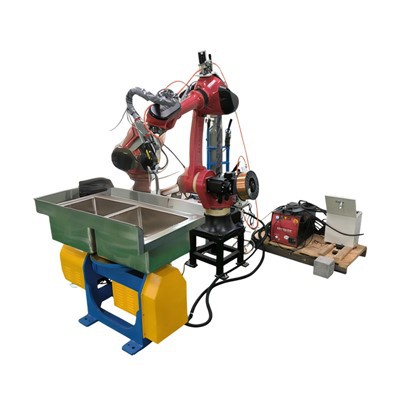
Understanding Repeatability in Loading and Unloading Robots
Repeatability, in the context of a loading and unloading robot, refers to the robot’s ability to perform the same movement or task consistently over multiple cycles. It is typically measured as the maximum deviation from a set position or path that the robot can achieve during repeated operations. For example, if a robot is programmed to pick up a box from a specific location and place it on a conveyor belt, repeatability determines how closely the robot can return to the exact pick-up and drop-off points each time it performs the task.
High repeatability is essential for several reasons. First, it ensures the quality and consistency of the work being done. In manufacturing, for instance, precise placement of components is crucial for the proper functioning of the final product. If a robot cannot repeat its movements accurately, it may lead to misaligned parts, which can result in product defects and increased waste. Second, repeatability improves efficiency. When a robot can perform tasks consistently, it reduces the need for manual intervention and adjustments, leading to faster production cycles and higher throughput. Finally, it enhances safety. A robot that can repeat its movements precisely is less likely to cause collisions or other accidents, which is especially important in environments where human workers are present.
Factors Affecting Repeatability
Several factors can influence the repeatability of a loading and unloading robot’s movements. Mechanical design is one of the most significant factors. The quality of the robot’s joints, bearings, and actuators can have a direct impact on its ability to move precisely. High-quality components with low backlash and minimal friction are essential for achieving high repeatability. For example, a robot with well-lubricated bearings will experience less wear and tear over time, which helps to maintain its accuracy.
The control system of the robot also plays a crucial role. A sophisticated control system can compensate for small errors and variations in the robot’s movements, ensuring that it stays on track. Advanced algorithms can be used to adjust the robot’s path in real-time based on feedback from sensors, such as encoders and vision systems. These sensors provide information about the robot’s position, orientation, and the environment around it, allowing the control system to make necessary corrections.
Environmental factors can also affect repeatability. Temperature, humidity, and vibration can all cause changes in the robot’s mechanical properties and sensor readings. For example, high temperatures can cause metal components to expand, which may lead to slight deviations in the robot’s movements. To mitigate these effects, our robots are designed with environmental protection features, such as sealed enclosures and temperature compensation algorithms.
How We Ensure High Repeatability in Our Loading and Unloading Robots
As a supplier of loading and unloading robots, we take several steps to ensure high repeatability in our products. First, we use high-quality materials and components in the construction of our robots. We work closely with our suppliers to source the best possible parts, and we conduct rigorous quality control checks to ensure that they meet our standards. For example, we use precision bearings and gears that are designed to minimize backlash and provide smooth, accurate movement.
Second, we invest in advanced control systems and software. Our robots are equipped with state-of-the-art controllers that use sophisticated algorithms to optimize the robot’s movements. These algorithms take into account factors such as the robot’s load, speed, and the environment in which it is operating. We also use advanced vision systems and sensors to provide real-time feedback to the control system, allowing it to make adjustments as needed.
In addition to these technical measures, we also provide comprehensive training and support to our customers. We understand that proper installation, programming, and maintenance are essential for achieving high repeatability in a loading and unloading robot. Our team of experts is available to assist customers with these tasks, ensuring that they get the most out of their robots.
Measuring and Testing Repeatability
To ensure that our robots meet the highest standards of repeatability, we conduct extensive testing and measurement during the manufacturing process. We use specialized equipment, such as laser trackers and coordinate measuring machines, to measure the robot’s position and orientation with high precision. These measurements are used to verify that the robot can repeat its movements within the specified tolerance.
We also perform real-world testing in our laboratories and customer sites. We simulate different operating conditions and tasks to ensure that the robot can perform consistently in a variety of environments. This allows us to identify any potential issues and make necessary adjustments before the robot is delivered to the customer.
The Importance of Repeatability in Different Applications
The importance of repeatability varies depending on the application. In some industries, such as electronics manufacturing, where components are very small and precise placement is critical, high repeatability is essential. A deviation of even a few micrometers can cause a product to malfunction. In these applications, our robots are designed to achieve repeatability levels of within ±0.05 mm or even better.
In other industries, such as logistics and warehousing, where the focus is more on moving large volumes of goods quickly, repeatability is still important but may not need to be as precise. However, even in these applications, a high level of repeatability can improve efficiency and reduce the risk of errors. For example, a robot that can consistently pick up and place pallets in the same location can help to optimize the use of warehouse space and reduce the time required for manual handling.
Conclusion
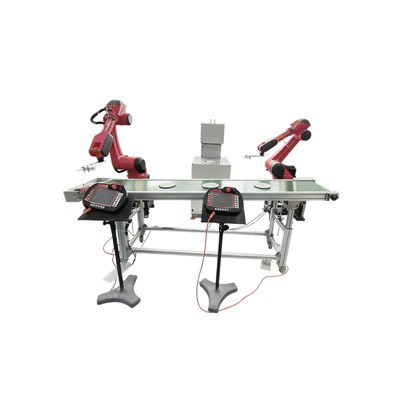
In conclusion, the repeatability of a loading and unloading robot’s movements is a critical factor in its performance and suitability for different applications. As a supplier of loading and unloading robots, we are committed to providing our customers with robots that offer high levels of repeatability. By using high-quality materials, advanced control systems, and comprehensive testing and support, we ensure that our robots can perform consistently and accurately over multiple cycles.
Stamping Robot If you are in the market for a loading and unloading robot and are looking for a solution that offers high repeatability, we would be happy to discuss your requirements with you. Our team of experts can help you choose the right robot for your application and provide you with the support you need to ensure its successful implementation. Contact us today to start the conversation and take your operations to the next level.
References
- Craig, J. J. (2005). Introduction to Robotics: Mechanics and Control. Pearson Prentice Hall.
- Siciliano, B., Sciavicco, L., Villani, L., & Oriolo, G. (2008). Robotics: Modelling, Planning and Control. Springer.
- Spong, M. W., Hutchinson, S., & Vidyasagar, M. (2006). Robot Modeling and Control. Wiley.
Dongguan Chuanglida Intelligent Equipments Co., Ltd.
As one of the most professional loading and unloading robot manufacturers and suppliers in China, we also support customized service. Please feel free to buy discount loading and unloading robot in stock here from our factory. For price consultation, contact us.
Address: Room 201, Building 2, No. 61, Shachang 1st Road, Dalang Town, Dongguan City, Guangdong Province
E-mail: haoguangli001@outlook.com
WebSite: https://www.boruntestech.com/
