If you’ve ever walked into a bathroom showroom, run your hand over a flawlessly smooth brass faucet, chrome shower handle, or stainless steel sink drain, you’ve probably wondered how those perfect finishes are achieved. As a barrel polishing machine supplier, I get this question all the time from plumbers, bathroom fixture manufacturers, and even DIY renovators: Can a barrel polishing machine be used for polishing bathroom fittings? The short answer is yes, but there’s a lot more nuance to it than just cranking a machine and calling it a day. Let me break this down from years of working with manufacturers, troubleshooting finishes, and refining how barrel polishing systems work for metal parts like bathroom fixtures. Barrel Polishing Machine
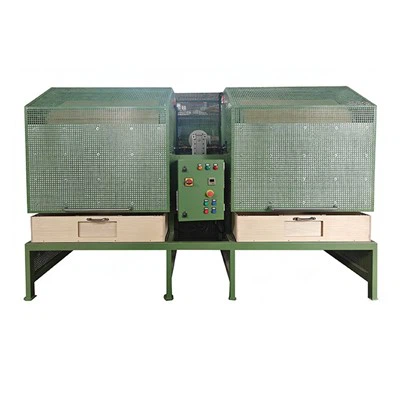
First, let’s get clear on what a barrel polishing machine actually does, because that’s where the confusion often starts. Unlike orbital polishers or hand-held buffers that work on small, specific areas, a barrel polisher is a rotating, horizontal or vertical drum that holds a batch of parts, polishing media, and a chemical compound. As the barrel turns, the media tumbles against the bathroom fittings, creating uniform friction that buffs away surface imperfections, scratches, and mill scale (the dark oxidized layer left on metal after casting or stamping). For bathroom fittings—most commonly brass, chrome-plated brass, stainless steel, zinc alloy, and even copper—this batch process is a game-changer compared to hand polishing, which is inconsistent, labor-intensive, and takes way too long for high-volume production.
But here’s the thing: not all barrel polishing setups are created equal for bathroom fittings. I’ve seen too many manufacturers try to use a general-purpose barrel polisher and end up with messed-up finishes—parts that are dull in spots, have uneven plating adhesion, or even get dented from rubbing too hard against other parts. The key is matching the barrel’s design, media type, and compound to the specific material and finish you need for bathroom fixtures.
Let’s start with the most common bathroom fitting material: chrome-plated brass. Most faucets, shower arms, and towel rings start as brass castings or stamped blanks. Those raw brass parts have tiny pores, tool marks, and rough edges straight from the die, which would show through a thin chrome plate if not prepped properly. That’s where barrel polishing comes in as a critical pre-plating step, not just a final finish. I once worked with a small faucet maker in Ohio who was hand-polishing all their pre-plated brass parts and struggling to keep up with a $50k/year order from a major home improvement chain. They switched to a 5-cubic-foot horizontal barrel polisher with stainless steel pin media, and within a month, their labor time per batch dropped from 8 hours to 1.5, and their rejection rate for plating defects went from 12% to less than 2%. The pin media is perfectly shaped to get into the nooks and crannies of faucet bodies—around the base of the handle, along the spout curves—where flat media can’t reach. The rotation speed of the barrel was adjusted too: for chrome-platable brass, we run the barrel at 8 RPM, which is fast enough to keep parts and media moving consistently, but not so fast that parts bang into each other and get dents that would ruin the final chrome coat.
Next, stainless steel bathroom fittings—think sink strainers, shower heads, and luxury towel bars. These are often used without plating, so the polish is the final product. Barrel polishing for stainless steel requires a different approach, because stainless is much harder than brass, so you need media that can cut without leaving metallic contamination (which would cause rust spots later). I recommend ceramic media for stainless steel parts, because it’s dense enough to abrade the stainless evenly, but it doesn’t shed tiny metal particles that can stick to the part and cause corrosion. I had a client in California making high-end 304 stainless steel shower heads who was using a general media that left iron residue on their parts, leading to customer complaints about rust spots within a year of installation. Swapping to our alumina ceramic media and a mild, pH-neutral polishing compound designed for stainless solved that problem immediately. We also switched them to a closed-loop barrel system that recycles the compound and media, cutting their material costs by 40% a year while improving finish consistency. For stainless steel, the barrel rotation speed is a bit slower—around 6 RPM—because stainless parts are often thinner than brass castings, and faster rotation can warp delicate components like thin sink rims.
Zinc alloy fittings, which are common for affordable hardware like drawer pulls and toilet lever handles, have their own set of considerations. Zinc is soft, so you have to be careful not to over-polish it, which can wear down sharp edges or cause uneven thinning of the metal. For zinc parts, we use plastic media with a mild polishing compound, and run the barrel at a slower 5 RPM rotation. One of my smaller clients was making zinc toilet seats and was finishing parts by hand, which meant that a third of their parts had inconsistent edges that looked cheap. After switching to our vertical barrel polisher designed for soft metals, their edge quality became uniform across all batches, and they were able to bid on a contract for a national home goods store that required 100,000 parts a month—something they couldn’t do with hand polishing.
Now, let’s talk about the part of barrel polishing that most people don’t consider: finishing operations after the barrel, which is where you get that showroom-worthy shine that makes bathroom fittings look premium. Barrel polishing doesn’t give you a mirror finish on its own; it’s the prep step that makes that final shine possible. After barrel polishing, parts go through a rinsing step to remove residual compound, then often a vibratory burnish for an extra high shine, or a final chemical polish for chrome-plated parts. But even that final step is easier and more consistent when the parts are prepped with barrel polishing. I’ve seen manufacturers skip barrel polishing and try to buff raw metal parts by hand, ending up with scratches that are impossible to remove without stripping the entire part and starting over. Barrel polishing creates a uniform surface profile, so the final finish is smooth enough that plating adheres correctly, and the shine lasts for years without dulling.
One common misconception is that barrel polishing can only be used for small, individual parts, but that’s not true. We’ve supplied barrel polishers to manufacturers processing full faucet assemblies—faucet bodies with handles and spouts still attached, packaged together in the barrel. The key is separating parts with dividers in the media or using barrel liners that prevent large parts from banging into each other. I worked with a manufacturer in Texas that was assembling faucets, hand-polishing each part, and then hand-assembling them, which took 12 minutes per faucet. They switched to a horizontal barrel polisher that holds 12 fully assembled faucets at a time, with custom plastic separators that keep the handles and spouts from rubbing against the main body. Now they process batches of 120 faucets at once, cutting their per-faucet production time to 2 minutes, and the assembly has fewer defects because parts are aligned before polishing instead of after.
Of course, there are limits to what barrel polishing can do for bathroom fittings. If you’re looking for a one-of-a-kind custom finish, like a hand-brushed texture or a matte black finish, barrel polishing might not be the right choice—those are often done with powder coating or specialized hand treatments. But for standard finishes: chrome, stainless steel polish, satin nickel, brushed brass, even antique brass, barrel polishing is the most efficient, cost-effective method on the market. It reduces labor costs by up to 70% compared to hand polishing, cuts material waste, and produces a more uniform finish that reduces customer returns.
Another big advantage of barrel polishing is its ability to handle different sizes of bathroom fittings in the same batch, as long as you choose the right media size. For example, if you have a batch that includes small zinc drawer pulls and larger brass faucet stems, you can use mixed-size media to polish both at once, as long as the parts aren’t so different in size that small parts get stuck in gaps between large media. That flexibility is a huge benefit for small manufacturers that produce multiple types of bathroom hardware, instead of needing a separate polishing setup for each product line.
As someone who’s worked with barrel polishing systems for over 15 years, I’ve seen firsthand how this technology has transformed bathroom fitting manufacturing. Ten years ago, most small fixture makers couldn’t afford a barrel polisher, so they relied on hand labor that was inconsistent and expensive. Now, compact, entry-level barrel polishers are available for small businesses, while large industrial systems for mass production can handle hundreds of thousands of parts a month. The key is choosing the right system for your specific needs: how many parts you process monthly, what materials you work with, what finish you’re targeting, and how much space and budget you have.
If you’re a bathroom fittings manufacturer currently struggling with high labor costs, inconsistent finishes, or plating defects, a barrel polishing machine is absolutely worth exploring. I’ve worked with companies of all sizes, from 5-person family operations to large multinational fixture makers, and I can help you design a system that fits your production needs. We don’t just sell equipment; we provide custom media recommendations, training on barrel rotation speed and compound use, and ongoing support to make sure your polished bathroom fittings look their best, every single batch. Whether you’re polishing pre-plated brass parts, stainless steel shower heads, or zinc hardware, there’s a barrel polishing setup that will meet your needs.

If you’re ready to streamline your bathroom fitting polishing process, reduce costs, and improve your product quality, I encourage you to reach out to discuss your specific requirements. We can walk you through different barrel polisher options, media types, and setups, and help you find a solution that works for your business.
Grinding Parts Separator References
- ASM International. (2005). Surface Finishing of Metals. Materials Park, OH: ASM International.
- Brown, J. R. (2011). Friction and Lubrication in Manufacturing Processes. Boca Raton, FL: CRC Press.
- Manufacturing Engineering Association. (2018). Batch Finishing Techniques for Metal Components. Chicago, IL: SME.
- Nickel Institute. (2020). Chrome Plating: Best Practices for Surface Preparation. Brussels, Belgium: Nickel Institute.
Dongguan Xindingsheng Intelligent Grinding Technology Co., Ltd.
Dongguan Xindingsheng Intelligent Grinding Technology Co., Ltd. is one of the most reliable barrel polishing machine manufacturers and suppliers in China, also supports customized service. Please feel free to wholesale bulk high quality barrel polishing machine in stock here from our factory. Contact us for pricelist.
Address: Room 101, Building 1, No. 73 Dahuangmei Road, Dalingshan Town, Dongguan City, Guangdong Province, China
E-mail: cndskj@126.com
WebSite: https://www.xdsfinishing.com/
